AI Requires Discernment, Not Certainty
Early in the AI cycle, a tech-forward friend introduced me to ChatGPT and described how he and his company were beginning to use it.
I had been an early adopter before. In the early 1990s, I lived on Cape Cod near the Woods Hole Oceanographic Institution. Scientists there showed me this strange new thing called the internet and let me explore. I remember thinking, This is going to change everything.
Thirty years later, I had the same feeling about artificial intelligence. I was excited about the possibilities
So I dove in.
Today, I have paid accounts for ChatGPT, Claude, Perplexity, Manus, and Notion AI. I use Microsoft Copilot every day. I don’t subscribe to all of them because I enjoy collecting technology. I use them because each one thinks a little differently and is better at different things. When I am analyzing something, I find that comparing their perspectives often teaches me as much as their answers.
But somewhere along the way, a different question began to nag at me.
Has working with AI changed the way I think?
Around our dinner table, that’s become a recurring conversation.
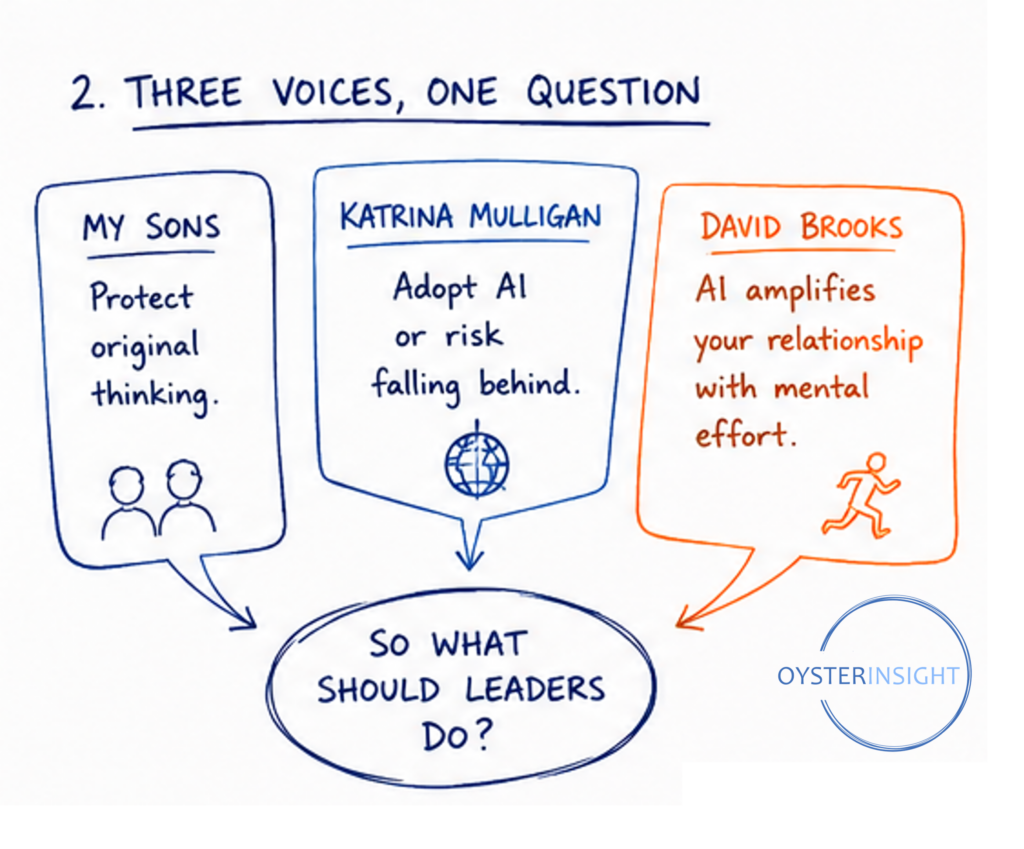
My sons, now 18 and 20, are deeply skeptical of AI. They worry that if we outsource too much thinking, we risk losing the mental muscles that come from wrestling with difficult ideas ourselves. It’s a concern I understand.
Around the same time, I heard Katrina Mulligan, OpenAI’s Head of National Security Policy, describe a very different concern. If the United States fails to adopt AI aggressively while strategic competitors like China continue to accelerate, she argued, we risk falling behind in one of the defining technologies of our time.
Those ideas seem to pull in opposite directions.
One worries that AI will weaken our minds.
The other worries that not embracing AI will weaken our future.
Both felt true.
Then I read David Brooks’ recent essay in The Atlantic. Brooks argues that AI isn’t used by everyone equally. Some people use it to avoid mental effort. Others use it to pursue more of it. The people who thrive, he suggests, are “mental marathoners”—people who use AI not to replace their thinking, but to tackle harder intellectual work.
His essay gave language to something I’d been feeling for months but hadn’t been able to articulate. AI wasn’t making my work easier. It was changing the kind of thinking my work required.
As a leadership consultant, clients don’t hire me because I can generate words. They hire me to help executive teams make sense of complexity, challenge assumptions, and decide what matters.
That realization reinforced something I’ve long believed about leadership development: sustainable performance comes from changing behaviors, not simply acquiring knowledge. AI is no different. The organizations that benefit most won’t necessarily be those with the best technology. They’ll be the ones that cultivate the best thinking habits.
AI has become an extraordinary intellectual sparring partner.
I’m a verbal thinker. I often don’t know exactly what I think until I begin writing or talking. I’ll bring AI an idea and ask it to attack my logic. I’ll ask how a skeptical board member might interpret a recommendation. I’ll compare responses across multiple models, not because I’m searching for consensus, but because their differences expose assumptions I hadn’t considered.
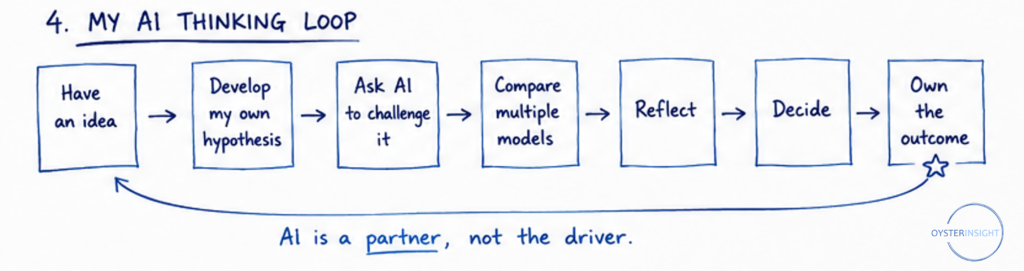
Sometimes AI strengthens an idea.
Sometimes it dismantles one I thought was solid.
Those have been some of the most valuable conversations I’ve had.
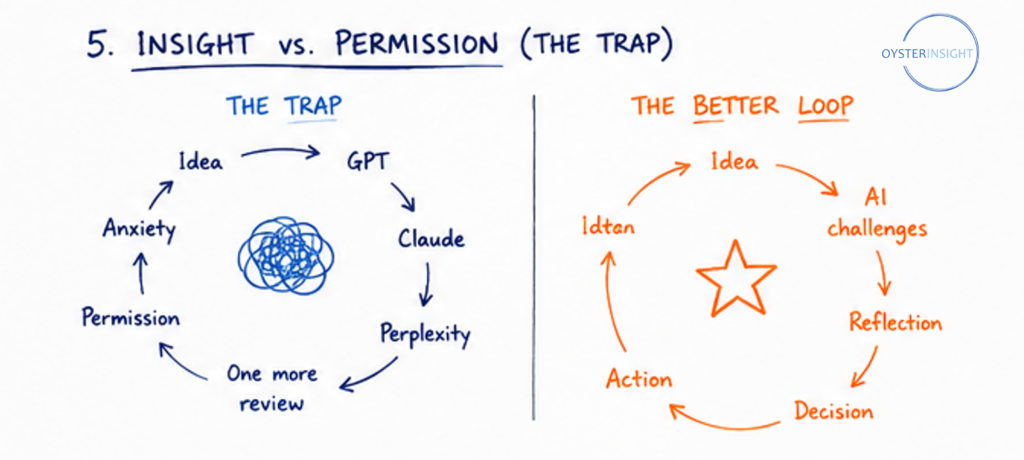
But I’ve also discovered a trap.
There have been times I’ve asked one more AI model.
I caught myself asking GPT, then Claude, then Perplexity essentially the same question.
None of them disagreed dramatically.
I wasn’t searching for insight anymore.
I was searching for permission, often to say something brave.
That wasn’t deeper thinking.
It was outsourcing confidence.
Recognizing that difference has probably been the most important lesson AI has taught me.
Around this same time, I met entrepreneur and investor Jonathan Aberman and learned about Hupside, a platform built around a deceptively simple premise.
We have agency.
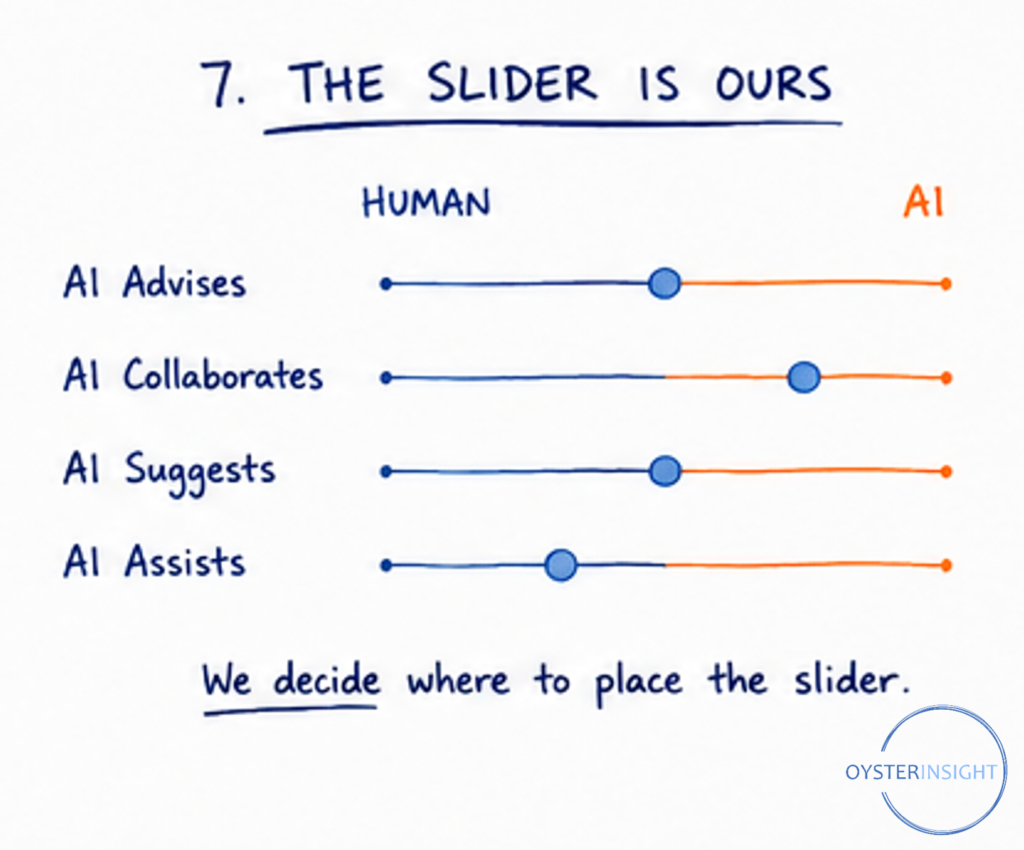
AI doesn’t determine how much autonomy we surrender.
We do.
Every prompt is a choice. Every decision to accept, challenge, revise, or reject AI’s response is an exercise of human judgment.
That idea resonated deeply with me because it shifted the conversation away from technology and back toward behavior.
Too often we become judgmental about AI. We declare it either the greatest productivity tool ever invented or the beginning of intellectual decline.
Leadership demands something different. It demands discernment. Judgmental thinking asks whether AI is good or bad. Discernment asks a better question:
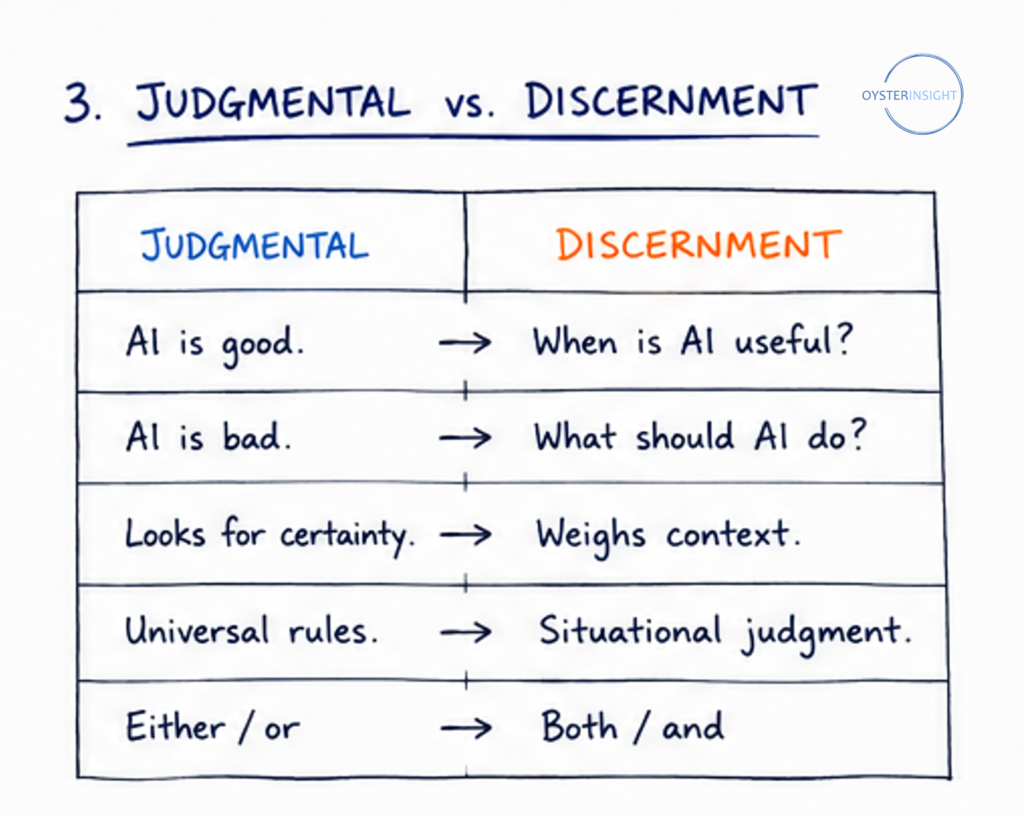
How should this tool be used in this situation?
- What work should AI do?
- What work should remain mine?
- Where can it challenge my thinking?
- Where might it tempt me to stop thinking altogether?
Those aren’t technology questions. They’re leadership questions.
That’s why I find Hupside’s work so interesting. Hupside is focused on preserving and measuring original human thinking in an age increasingly shaped by AI. Rather than simply measuring AI adoption, it explores something far more consequential: whether people are continuing to exercise original thinking while using these powerful tools.
Organizations don’t win by adopting technology. They win by cultivating better thinking.
Two companies can invest in the same AI platforms and achieve dramatically different outcomes. One uses AI to accelerate curiosity, challenge assumptions, and explore possibilities. The other gradually becomes dependent on AI-generated answers.
The technology is identical.
The behaviors are not.
And behavior is where competitive advantage lives.
This is where I think leadership is changing. Not because executives suddenly need to become AI experts. But because discernment is becoming even more valuable.
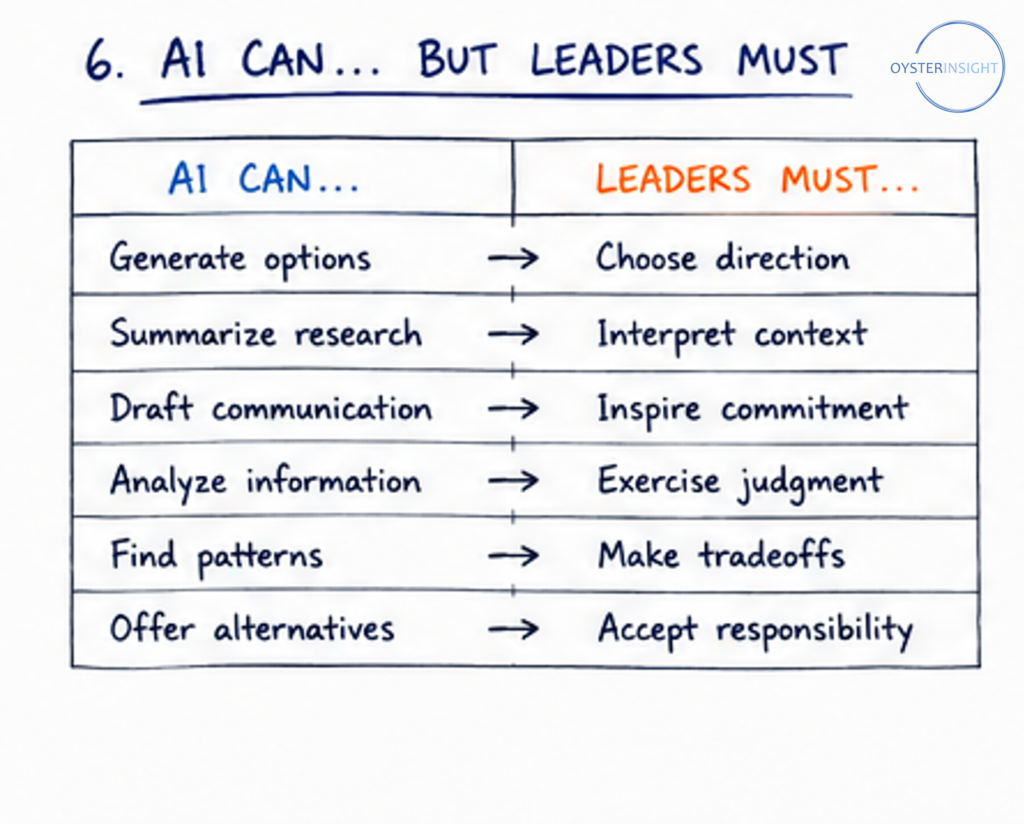
- AI can generate strategic options.
- It can summarize research.
- It can draft presentations.
- It can analyze enormous amounts of information in seconds.
- It can even make remarkable persuasive arguments for opposing points of view.
AI can generate options.
Leaders generate vision.
AI cannot decide which option best fits your organization’s culture, your customers, your values, your people, and your appetite for risk. That’s still leadership.
It also cannot prioritize which ideas are important.
Nor can it recognize the idea no one has generated yet.
That’s still the leader’s work.
In many ways, I think AI is doing what every great coach, mentor, and challenging colleague has always done.
It’s revealing our habits.
- If we approach it looking for shortcuts, it happily provides them.
- If we approach it with curiosity, it gives us more questions to explore.
- If we ask it to challenge our assumptions, it often does.
- If we ask it simply to validate what we already believe, it will usually do that, too.
The technology isn’t making those choices. We are.
So when people ask me whether AI is making us smarter or dumber, I don’t think that’s the most interesting question anymore.
The more interesting question is whether it’s making us more discerning.
- Whether we’re becoming more intentional about when we rely on it.
- More disciplined about when we insist on doing the hard thinking ourselves.
- More willing to wrestle with uncertainty instead of asking for one more answer.
David Brooks is right that AI amplifies our relationship with mental effort.
Jonathan Aberman is right that we have agency over how much autonomy we grant it. And after living with these tools every day for the past several years, I’ve come to believe those ideas aren’t in conflict. They’re complementary.
The conversation around AI often asks whether it will replace jobs.
I think the more interesting question is whether it will change how leaders lead.
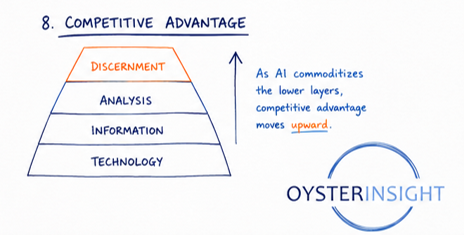
When information is abundant and analysis is nearly instantaneous, leadership shifts away from producing answers and toward asking better questions, weighing competing evidence, and exercising sound judgment.
In other words, discernment becomes the competitive advantage.
David Brooks argues that AI amplifies our relationship with mental effort.
Jonathan Aberman reminds us that we have agency over how much autonomy we grant it.
My sons remind me that original thinking is worth protecting.
I’ve come to believe they are all pointing toward the same truth.
AI doesn’t replace leadership.
It raises the standard for it.
Information has become abundant.
Analysis is becoming automated.
Original thought becomes exponentially more valuable.
And scarce capabilities create competitive advantage.
The leaders who stand out won’t be the ones with the best prompts.
They’ll be the leaders who treat AI as an extraordinary advisor but never mistake it for the author of their judgment.